
70% of Transformations Fail. Your Tool Won't Fix That.
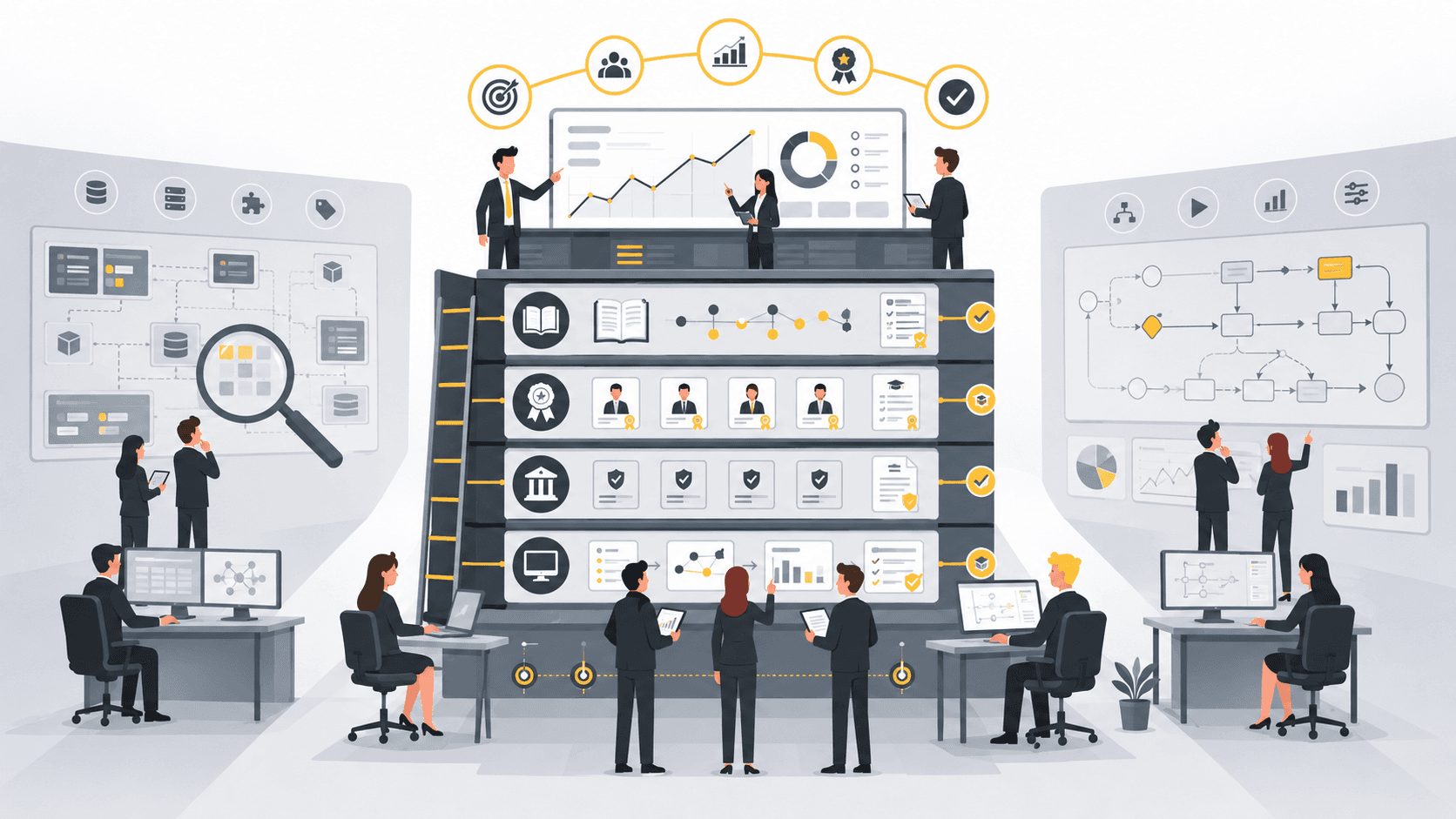
You're Buying Visibility and Calling It Transformation
LeanIX maps your IT. For ~£58,000 a year, you get a beautifully visualised map of the technology you already own.
BusinessOptix models your processes. Free trial to start. Drag, drop, and watch your processes dance across the screen.
What both actually deliver? A more expensive way to confirm what you already know: your IT is complex, your processes are messy, and nobody can agree who owns the outcome.
Visibility is not architecture. Modelling is not transformation. And a tool without a framework is just a very expensive sketchpad.
The Comparison: Tool vs. Framework vs. Full Stack
| HOBA | LeanIX | BusinessOptix | |
|---|---|---|---|
| What it is | Business-led customer-first architecture-driven framework + training + certification + AI-enabled software | Enterprise architecture management & IT landscape visualisation | Process modelling, simulation & BPMN tooling |
| Core philosophy | Architecture-first. Outcome-obsessed. | IT-first. Inventory-obsessed. | Process-first. Diagram-obsessed. |
| Methodology | HOBA Framework — 4+1 Ladder, 3 Ls | None. Tool-only. | None. Tool-only. |
| Published proof | 6× international bestseller (The Business Transformation Playbook) | Third-party analyst reports | Product documentation |
| Training & certification | Accredited, in-person & virtual | Not available | Not available |
| Software purpose | HOBA Pro — AI-enabled platform that executes the framework | IT catalogue & dependency mapping | Process simulation & mapping |
| Who it's for | Transformation leaders, business architects, programme directors who own outcomes | IT architects managing application portfolios | Business analysts mapping current-state processes |
| What you get | A repeatable system to design, govern, and deliver business-led transformation | A map of what you already have | A simulation of what you wish you had |
Why HOBA Wins: The Full Stack Nobody Else Has
LeanIX and BusinessOptix are tools. HOBA is a system. A tool gives you features. A system gives you results.
1. A Published Framework, Not a Product Manual
The HOBA Framework is documented, taught, and tested. It's the 4+1 Ladder. It's the 3 Ls. It's the difference between hoping your transformation works and knowing exactly which rung you're on.
2. Training That Builds Capability, Not Dependency
We train your people to think like business architects. Accredited certification means your team owns the capability — forever. No vendor lock-in.
3. AI-Enabled Software Built for Architecture
HOBA Pro isn't a generic platform retrofitted for transformation. It's built from the ground up to execute the HOBA Framework — with the 3 Ls embedded in the data model and outcomes tracked at every Layer.
4. We Measure Outcomes, Not Adoption
Your CFO doesn't care how many people logged into a dashboard. They care if the transformation delivered what was promised. HOBA's architecture-first approach connects every activity to a business outcome.
Who Each Is Really For
Choose LeanIX if…
You are an IT director who needs to rationalise 400 applications and prove to auditors that you know what software you're running. It's a good tool for that. It will not transform your business.
Choose BusinessOptix if…
You are a process analyst who needs to model 'what if' scenarios for a call centre workflow. It's a good tool for that. It will not align your operating model to your strategy.
Choose HOBA if…
You are a transformation director, programme lead, or business architect who has been burned by vendor promises before. You know that 70% failure statistic because you've lived it. You want a business-led, architecture-driven system that starts with outcomes and works backwards.
LeanIX answers: "What technology do we own?" BusinessOptix answers: "What does our process look like?" HOBA answers: "How do we transform the business and make it stick?"