
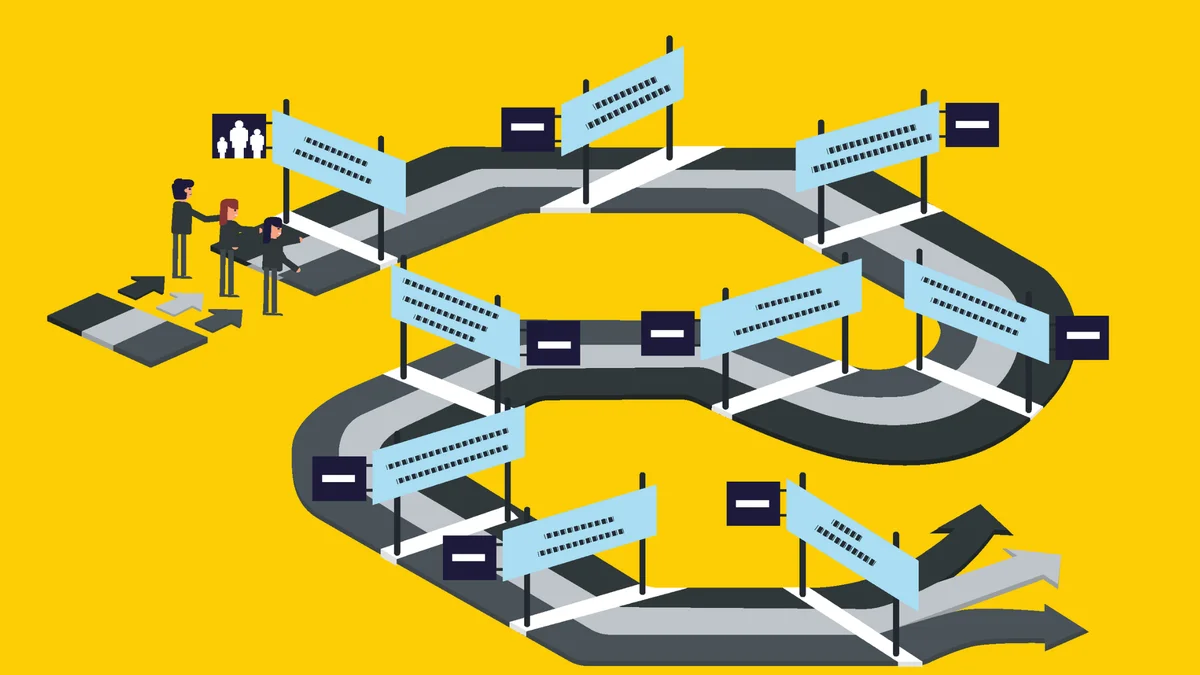
Strategic Shift: From Regulator to Operator — A UK Transport Authority Transformation Case Study
What this case study is about
A major UK government transport authority made a strategic shift—from a passive regulator to an active franchise operator. This case study shows how the organisation moved beyond "solution mode" and used the HOBA® 6-Step Design Process to design a Target Operating Model (TOM) anchored on business benefits: financial stability, operational performance, and strengthened safety oversight.
Download the Case Study — Get the PDF instantly by entering your details in the form.
The challenge: why "regulation only" wasn't enough
Regulatory constraints
As a regulator, the authority had limited ability to directly intervene when service delivery quality dropped—creating a gap between oversight and outcomes.
Financial risk with limited levers
Revenue volatility created exposure without the operational controls needed to stabilise performance and manage the upside/downside.
Dependency on external operators
Over-reliance on bus operators led to inconsistent standards across depots, routes, and stations—making system-wide improvement difficult to sustain.
Safety gaps and enforcement friction
Health, travel safety, and compliance expectations increased—yet the authority struggled to enforce strict oversight while remaining purely regulatory.
The HOBA® approach: how the shift was designed (without guesswork)
Why HOBA®
HOBA® was used to avoid the classic transformation trap: jumping to a solution (often technology-led) before the business has aligned outcomes, governance, and operating model decisions. The programme was structured to answer the 5W1H (Why, Who, What, Where, When, How) with traceability from strategy to implementation.
A Target Operating Model (TOM) built around business benefits
Instead of "patching" a regulatory model, the organisation designed a franchising operating model that enabled financial control, operational oversight, and measurable safety outcomes—then implemented it through a phased roadmap.
What you'll see inside the case study (HOBA® 6-Step highlights)
Step 1 — Focus (The Strategic Why)
Defined VSOM (Vision, Strategies, Objectives, Measures) and aligned leadership on what success looks like: shifting from regulator to operator, with a fully integrated, safe, financially stable transport network.
Step 2 — Control (The Who)
Established governance and decision-making—creating the right oversight for health & safety and travel safety, and mapping stakeholder concerns across operators, depot staff, and station personnel.
Step 3 — Analyze (The What)
Baselined the current operating model to identify inefficiencies and revenue "leaks," and surfaced why fragmented operator dependencies were driving inconsistency.
Step 4 — Evaluate (The Operational Why)
Defined the benefits model and prioritised outcomes—financial stability and growth, improved customer experience, and enhanced safety oversight—then selected the franchise model because it best enabled these benefits.
Step 5 — Design (The Where & How)
Designed the TOM: new structures, new operational processes (route optimisation, revenue collection, safety auditing), and the capability uplift required to operate—not just monitor.
Step 6 — Implement (The When)
Built the phased roadmap to manage risk, delivered enablement and training for staff transitioning into operational roles, and ensured every change traced back to a defined business benefit (safety, revenue, service performance).
Outcomes delivered
A successful shift to franchise operator
The organisation moved from regulatory dependency to operational control—strengthening its ability to influence outcomes across the network.
Financial control and reduced volatility
Revenue streams were unified and managed with greater visibility and governance, reducing volatility and improving stability.
Operational excellence across the network
More consistent oversight of depots, stations, routes, and operator performance—creating clearer standards and accountability.
Stronger safety oversight
Travel safety and health & safety oversight were embedded into governance and operating processes, improving enforcement and outcomes.
Who this is for
Public sector, transport, and infrastructure leaders
If you're facing regulatory limitations, operator complexity, revenue risk, or safety oversight challenges—this case study shows how to structure a business-led transformation that lands in the real world (not just on paper).
Download the Transport Transformation Case Study
Get the full PDF (free)
Enter your details to download the full case study and see the end-to-end TOM journey—from VSOM and governance, through operating model analysis and benefits definition, to design and phased implementation.
SNEAK PEEK — LOOK INSIDE
See what's inside before you download

1 / 5
SNEAK PEEK — LOOK INSIDE
See what's inside before you download
1 / 5